
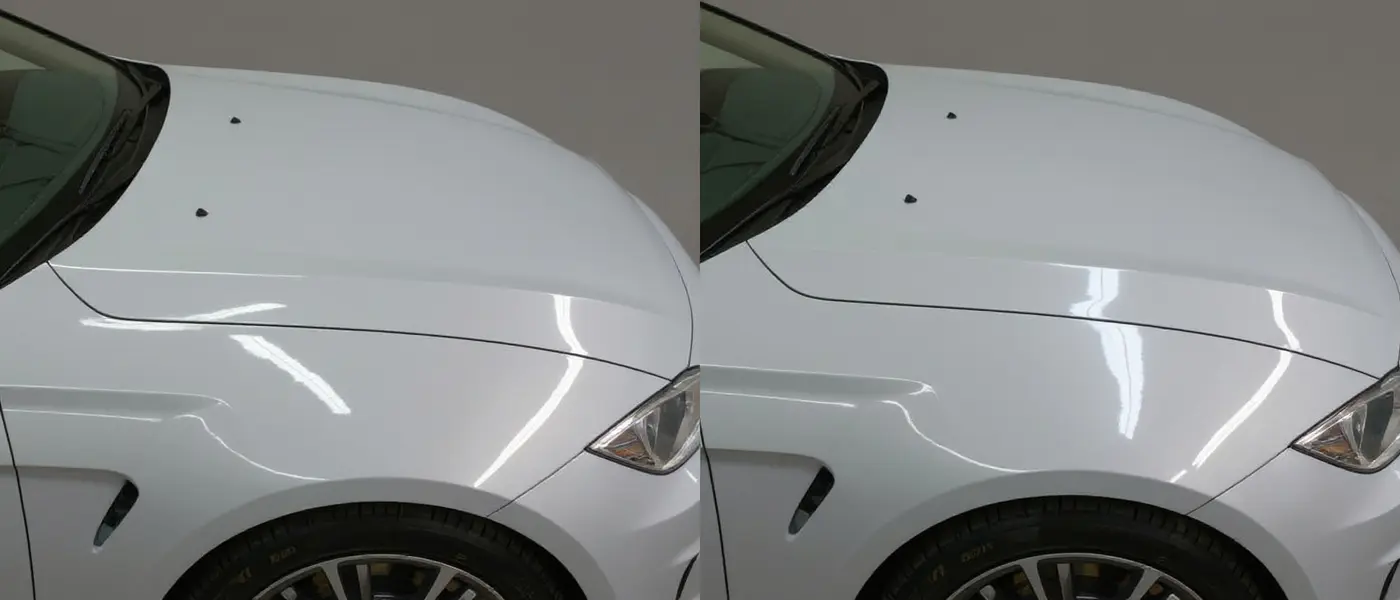
Side-by-side comparison
PDR vs body shop: for hail specifically.
Both can repair hail damage. Only one keeps your factory paint, avoids a CarFax flag, and preserves resale value. The comparison matters more than most customers realize — especially if you plan to trade or sell the vehicle in the next 3-5 years.
Side-by-side
The comparison on the eight things that matter.
| What matters | PDR | Body shop |
|---|---|---|
| Factory paint preserved? | Yes — untouched | No — sanded, primed, repainted |
| CarFax body repair flag | None | Yes, filed permanently |
| Time to complete | 1–3 days for moderate hail | 2–4 weeks typical |
| Resale impact | None measurable | 5–15% reduction at trade-in |
| Cost to insurance | Lower — no materials, less labor | Higher — filler + paint + labor |
| Customer deductible | May be offset via assistance program | Same deductible, no typical offset |
| Rental time | 1–3 days | 2–4 weeks |
| Warranty availability | Lifetime on PDR work | Typically 1-year paint warranty |
How each actually works
Two repair methods, two very different processes.
The PDR process
A PDR technician accesses the back side of the damaged panel — usually through existing body openings after removing trim, door panels, or headliner. Using precision rods from 6" to 60+" long, they push each dent back to factory contour from behind the panel. For dents on double-walled panels or areas with no rear access, they use the glue-pull method: bond a tab to the outer skin with hot-melt glue, pull with a slide hammer, then knock down any high spots. Every dent, one at a time. The factory paint is never touched — no sanding, no filler, no repaint.
The body-shop process
A body-shop technician grinds the damaged area down to bare metal, applies body filler (commonly called Bondo), sands it smooth, applies primer, matches the factory paint color, sprays two or three coats, applies clearcoat, and bakes the panel in a heated booth. For severe damage or cracked paint, the shop may skip the filler step and replace the entire panel instead — which requires cutting out and welding in a new piece before the paint process. Every damaged panel goes through some version of this cycle, which is why body-shop timelines run 2-4 weeks.
PDR vs body shop FAQ
What customers ask when choosing between methods.
-
Is PDR always the right choice for hail damage?
For about 95% of hail damage, yes. The exceptions: cracked or chipped paint (PDR can't restore broken paint), dents on sharp body lines or folded edges, previously filler-repaired panels, and severe damage where panel replacement is cheaper than repair. A good PDR shop tells you honestly when a body shop is the better call.
-
How much resale value does body shop repair cost me?
Typically 5–15% at trade-in. Dealers check CarFax on every used vehicle. A body-repair flag lowers the trade-in offer by that percentage. On a $30,000 SUV that's $1,500–$4,500 lost at trade-in. On a $60,000 luxury vehicle, $3,000–$9,000. Private-buyer impact is similar.
-
Can a body shop match my factory paint perfectly?
They can get close, not identical. Factory paint is applied in a controlled environment with specific equipment and curing — conditions no body shop can exactly replicate. Repainted panels typically match within 95-97% of the original, which is usually invisible to the eye but can diverge over time as the paint ages differently. PDR keeps factory paint factory, which means no match problem ever.
-
My insurance is pushing me toward their preferred shop. Is that body shop or PDR?
Insurance "preferred shops" (DRPs) are almost always body shops. The DRP system is built around traditional collision repair. Some insurers have started adding PDR specialists to their networks, but most DRPs default to body-shop work on hail damage. You are not required to use them — Missouri and Kansas anti-steering laws protect your choice.
-
Is PDR more expensive than a body shop?
Usually cheaper on hail damage specifically. A body shop has to grind out dents, apply filler, sand, prime, paint, blend, and cure — that's 8+ hours of labor per panel plus materials. PDR repairs the same panel in 1-3 hours with no materials cost. On a full-vehicle hail repair, PDR typically runs 30-40% less than body-shop equivalent. Which is why insurance pays for PDR approvingly — it's their cheaper option too.
Where we pick up