Aluminum hail repair, done in-house in Olathe
Aluminum panels need heat and hands that have worked them before. Ford F-150, Tesla, Rivian, Audi — the glue-pull method, magnetic induction heat, and patient, small-movement work. Most shops farm aluminum out and add a week. We keep it under one roof.
You file your claim — we never file for you. Once it’s approved, we handle the repair.
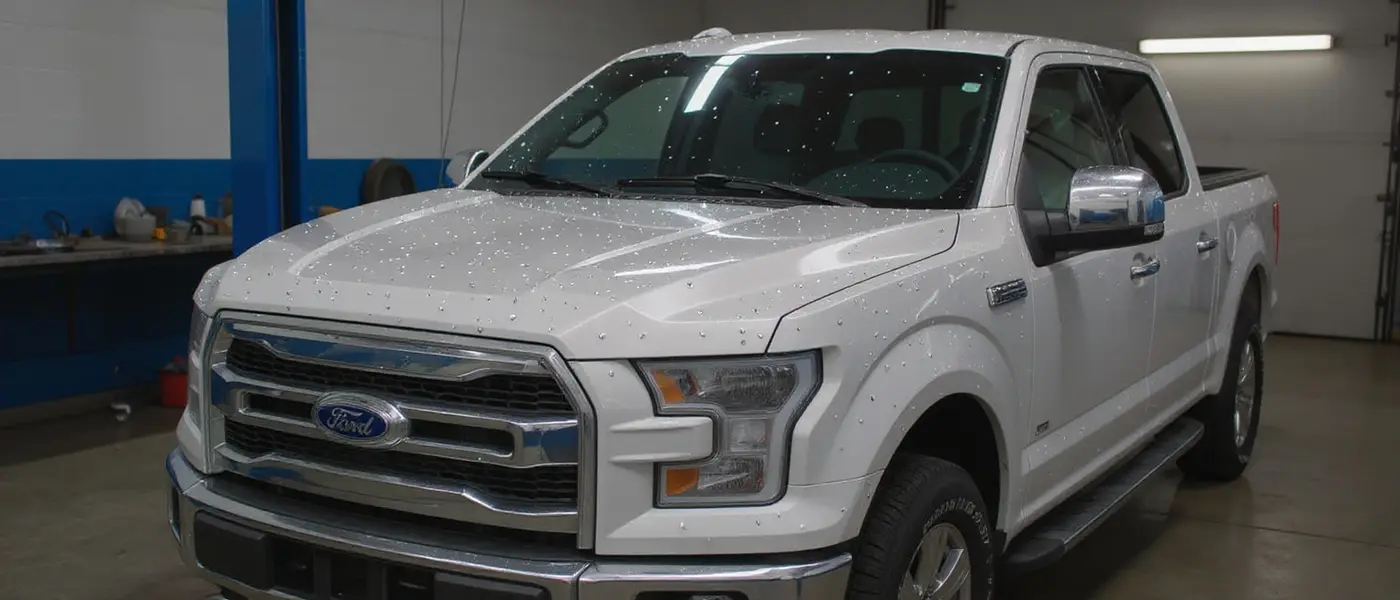
Aluminum panel elasticity is why every repair takes longer
Steel wants to spring back. Aluminum doesn’t — which is exactly why most shops won’t run this lane.
Steel has memory; aluminum doesn’t. When you push a dent out of a steel panel, the metal wants to return to its original shape, and that elasticity is what makes paintless dent repair possible. Aluminum doesn’t share it. Once the metal has been deformed it is content to stay that way, so repairing it takes heat to restore flexibility and careful, small movements so the panel isn’t stretched past its new shape.
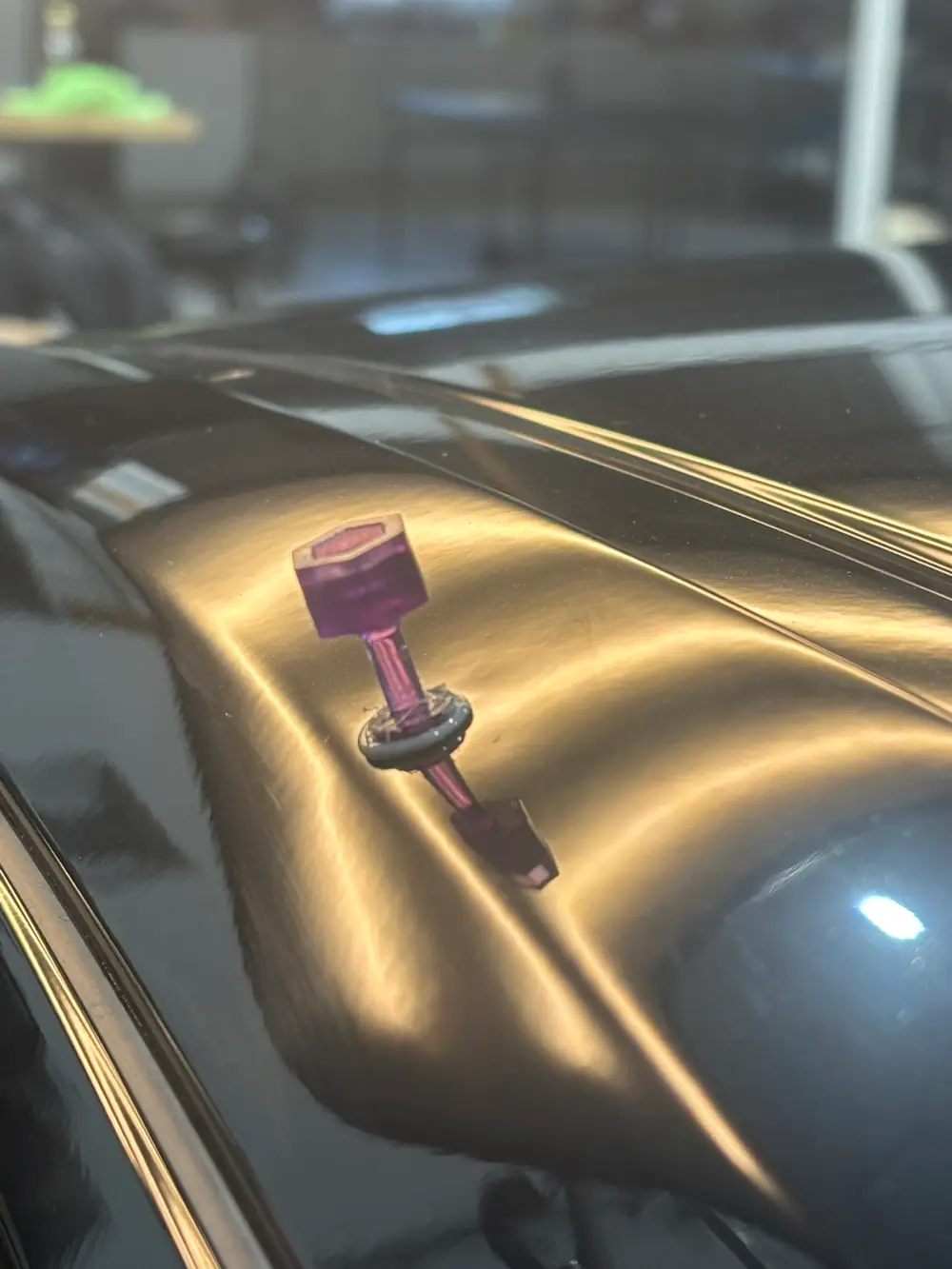
Heat-assisted paintless dent repair is the core technique. We use magnetic induction heaters — handheld devices that warm the metal without touching the paint — and infrared heaters across broader areas. The aluminum comes up to roughly 140–170°F, soft enough to work and far below any temperature that threatens the finish. From there a tech uses the same push and glue-pull techniques as on steel, just slower and with more heat passes.
The glue-pull method matters most on aluminum. Modern panels on trucks like the F-150 and the Tesla Cybertruck often have limited rear access; they’re bonded to structure or stamped with internal bracing that blocks rod work. Glue tabs go on the outside, get pulled with a slide hammer, and the high spot is knocked back down. It is slower than the push method, and it saves panels that would otherwise need full replacement.
The vehicles where aluminum paintless dent repair is the only right answer
If your vehicle is on this list, the repair needs heat-assisted technique and aluminum-specific tools — not a body shop’s filler and repaint.
Ford F-150 (2015+)
Aluminum body panels on a steel frame. Hood, doors, box, and fenders are all aluminum. It is the most common aluminum vehicle we see — some panels take a glue pull, others take a careful push.
Ford Super Duty (2017+)
Heavier-gauge aluminum than the F-150. The F-250, F-350, and F-450 use the same paintless dent repair approach and the same 25% material adjustment.
Tesla (all models)
Aluminum throughout, structural and cosmetic. Model S, 3, X, Y, and Cybertruck. We follow Tesla’s OEM guidance and power down certain systems before working specific panels.
Rivian R1T / R1S
Full aluminum body construction. The bonded joints in the Rivian body need particular care during glue-pull work, so the panel keeps its factory contour.
Audi A6, A7, A8, Q7, Q8
European aluminum space-frame construction. These panels do not forgive rushed work, which is why patient, heat-assisted technique matters here.
Land Rover / Range Rover
Aluminum across the full lineup. Panel shape is more complex, so the repair runs longer than a comparable steel job.
Jaguar XE, XF, F-Pace
Aluminum-intensive construction. Same patient approach as the Audi line — warmed metal, small movements, carefully documented.
Porsche Panamera, Cayenne, Taycan
Aluminum panels with mixed construction. Estimates sometimes miss the aluminum line, and we catch it when we document the full scope.
Aluminum hail repair pricing, explained up front
Aluminum is the standard hail matrix plus 25% — disclosed before any work starts, never as a surprise on the invoice.
What drives the aluminum number
Two things set the price, and the aluminum part is the predictable one. With comprehensive coverage you are responsible for your deductible and the approved claim covers the repair, which is why filing usually makes sense once the damage is past light.
- How many dents your vehicle has. The standard hail matrix scales by dent count and size, from dime to golf ball.
- The 25% aluminum adjustment. Aluminum is the standard matrix plus 25% for the heat-assisted technique and glue-pull tooling the metal requires.
- Disclosed up front. The adjustment is documented line by line on the CCC ONE estimate before any work starts — never a surprise on the invoice.
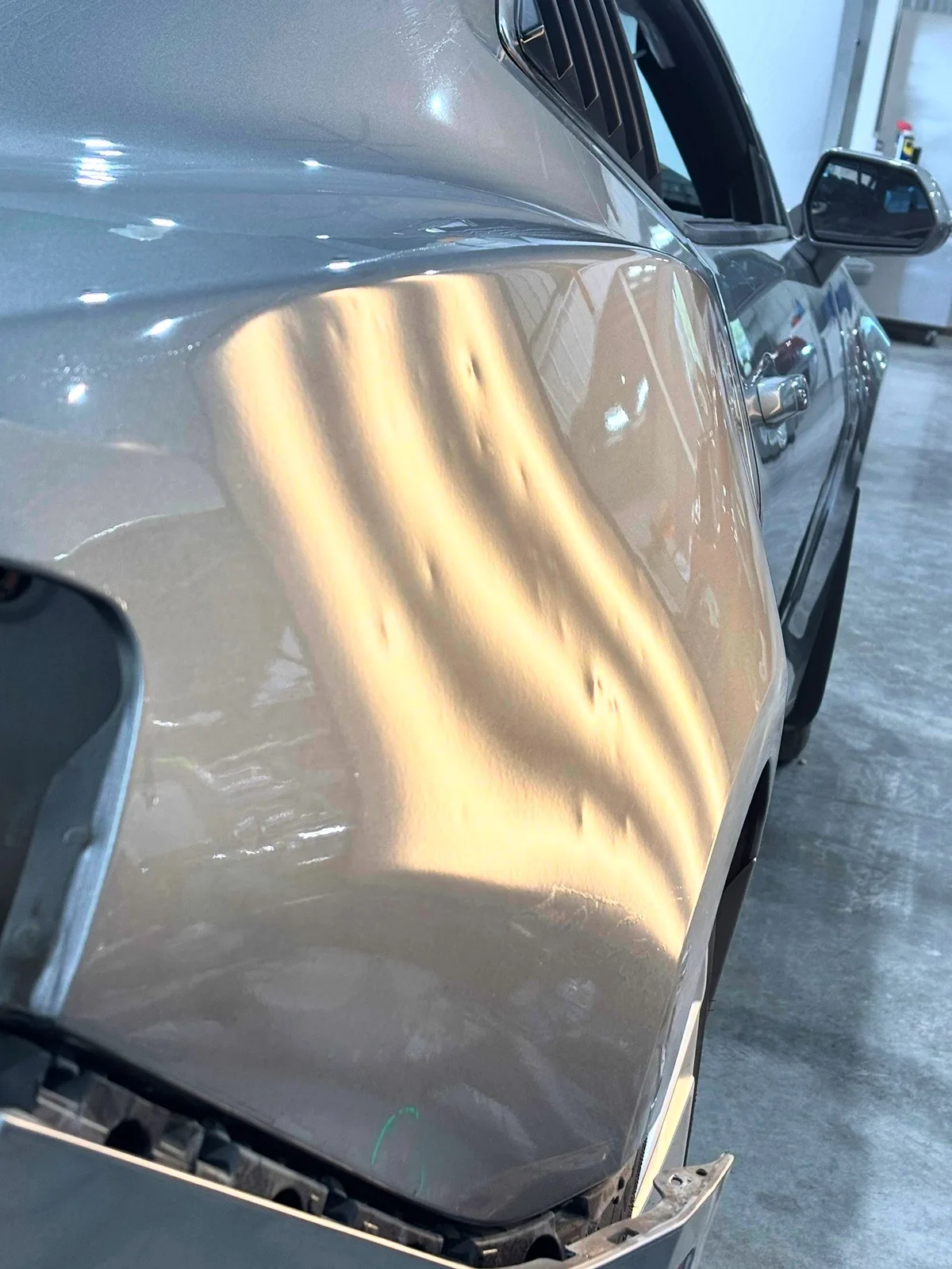
Light aluminum
$2,000 – $4,500
50–100 dents · dime to nickel
Repair time: 4–8 hours
Usually worth filing
Moderate aluminum
$4,500 – $10,000
100–300 dents · nickel to quarter
Repair time: 1.5–4 days
File the claim
Severe aluminum
$10,000 – $18,000+
300+ dents · quarter and larger
Repair time: 4–8 days
Call before accepting a total-loss offer
Which insurance carrier are you dealing with?
Every major carrier carries an aluminum rate in its hail matrix. Pick yours to start the free walkthrough — and if you don’t see it, choose “And More” and continue the same way.
Choose your insurance carrier to start the walkthrough.
Select your carrier below. If you don’t see yours, choose “And More” and continue with the same guided setup.








How an aluminum repair works, step by step
You stay in control of the claim, and we carry the repair. You make the call to your insurer — it’s your claim — and from there the work lands on us, from the LED inspection to the heat-assisted panel work to the final walkthrough. Here’s how the seven steps go.
Document the damage
Photograph every aluminum panel in good light. That record protects you if the first estimate runs light on a high-value vehicle.
We inspect it free in Olathe
At your place or our Olathe shop. We map every dent under LED line boards and write it up in CCC ONE format, with the aluminum panels flagged.
You file your claim
You open it with your carrier — it’s your claim. We hand you the exact script for your insurer. We never file for you.
We document the full scope
Every panel and the aluminum material adjustment, in the format adjusters expect, so the approved amount reflects the real work.
We pick up your vehicle
Free across the metro from our Olathe shop. Driveway, office lot, dealer lot — wherever the car is, we come to it.
We do the repair in-house
Bryan and the team work every aluminum panel by hand with heat assist and the glue-pull method. Factory paint preserved, no filler, no repaint.
We deliver it back
Cleaned, inspected, and looking like the storm never happened — with a lifetime warranty in writing.
Get your aluminum vehicle back to factory
Start the free walkthrough and we’ll show you exactly how to file your hail claim. Once it’s approved, we handle the repair — heat-assisted, in-house, factory paint preserved.
Aluminum hail repair questions
Why does aluminum hail repair cost more than steel?
Aluminum carries a 25% adjustment on top of the standard paintless dent repair matrix. The metal has lower elasticity than steel, so it wants to stay deformed once it has been dented. Repairing it takes heat-assisted paintless dent repair — magnetic induction or infrared heaters that relax the metal before we push or pull it back to factory contour. It also usually takes the glue-pull method rather than a pure rod push, because aluminum panels on trucks and electric vehicles often have no rear access.
In practice, a hood that runs about $1,800 on a steel sedan lands near $2,250 on an aluminum F-150. Most carriers approve the adjustment once the estimate documents it line by line.
Which vehicles have aluminum bodies?
Every Ford F-150 from 2015 on, the Ford Super Duty line from 2017 on, every Tesla, every Rivian, Land Rover, the Audi A8 and A6/A7 variants, Jaguar, and most Porsche models. If you are not sure, check your owner’s manual or a VIN decoder — body construction is usually listed there. Some hybrids mix aluminum panels, such as the hood and fenders, with a steel body, which changes the repair approach panel by panel.
Do most paintless dent repair shops handle aluminum?
Most don’t — they farm it out. Aluminum work takes years of training beyond steel paintless dent repair proficiency. A lot of metro shops quote an aluminum job and then subcontract it to a specialist, which adds a week to the timeline and can raise the real cost to you. We do aluminum in-house at our Olathe shop, where doing this since 2002 means the right tools and the right hands stay under one roof.
Can paintless dent repair handle high-strength steel too?
Yes, with the same 25% adjustment. High-strength and ultra-high-strength steel show up on the roof rails and B-pillars of many newer vehicles. Those metals resist deformation, which is good for safety and harder for repair. We use the same heat-assisted approach as aluminum — warm the metal, work it slowly, avoid over-pressing. Severe damage across those panels has its own guide.
Will my insurance pay for aluminum repair?
Yes — every major carrier recognizes the aluminum adjustment. We document it on the CCC ONE estimate as a material line item. State Farm, Progressive, GEICO, American Family, and USAA all carry aluminum rates in their hail matrix. The 25% appears alongside the base repair and gets approved with it. You file the claim — we never file it for you — and once it is approved we coordinate the repair with your insurer.
How long does aluminum hail repair take compared to steel?
Roughly 30–50% longer per panel. Light damage on an aluminum hood can take a full day where the same damage on a steel hood takes half a day. A full-vehicle severe repair adds one to three shop days. The repair is finished when it is right — we do not rush aluminum to hit a schedule.
Helpful guides before you file
Learn the process on your own terms.