How much does hail damage repair cost?
Hail repair cost comes down to one thing: how many dents you have, multiplied by how big they are, across each panel they touch. The insurance industry's CCC ONE matrix prices that, and it stays remarkably consistent from carrier to carrier and shop to shop. Light damage runs $1,500 to $3,500, moderate $3,500 to $8,000, and severe $8,000 to $15,000 or more. Here is the full breakdown — and why the first estimate you get is almost always too low.
Free inspection at our Olathe shop or wherever your vehicle is. You file your claim — we never file it for you.
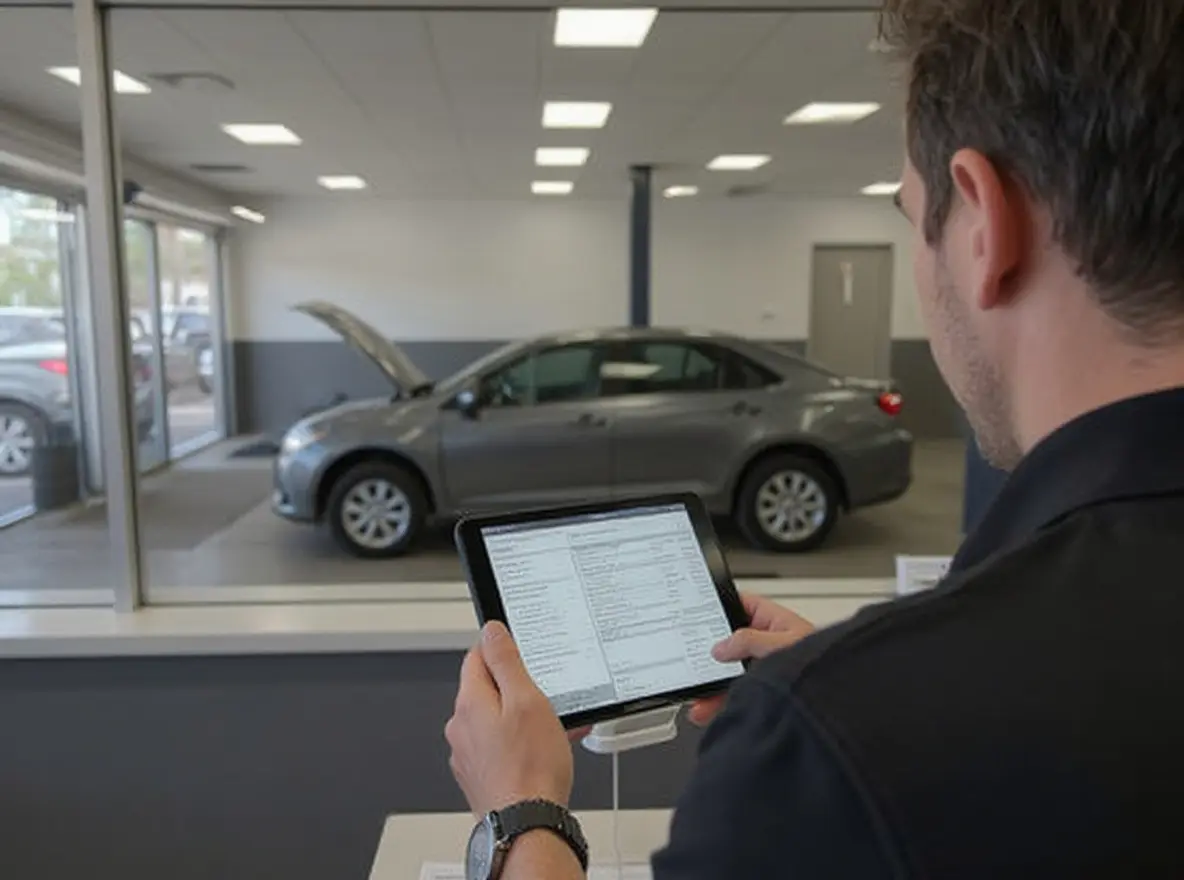
What does hail repair cost at each severity level?
The industry sorts hail damage into three tiers by dent count per panel and dent size. After writing these estimates since 2002, the pricing is more predictable than most first-time customers expect.
Light: $1,500–$3,500
50 to 100 dents across three to five panels, dime to nickel in size. The kind of damage a single fifteen-minute storm with smaller stones leaves behind. Repair time runs three to six hours. These are the claims where customers wonder whether filing is worth it — and the answer is usually yes.
Moderate: $3,500–$8,000
100 to 300 dents across six to ten panels, nickel to quarter in size. The most common claim we see — a longer storm, larger hail, most panels touched. Repair time is one to three days. This is where paintless dent repair earns its keep: real damage restored with no paint or filler.
Severe: $8,000–$15,000+
300 or more dents, quarter-size and up, damage on every panel. Often includes oversized dents that bill one at a time. Repair time is three to seven days. These are the claims that sometimes get flagged total loss — and the ones we sometimes save.
How does the paintless dent repair pricing matrix work?
Hail pricing is not a flat rate or an hourly rate. It is a matrix built on three variables, codified in the CCC ONE platform that roughly 90 percent of shops and carriers use.
Key takeaways
- Cost comes down to dent count times dent size, across each panel touched — priced on the CCC ONE matrix used by roughly 90 percent of shops and carriers.
- By severity: light $1,500–$3,500, moderate $3,500–$8,000, severe $8,000–$15,000 or more.
- The first insurance estimate runs 20 to 40 percent low, because adjusters inspect without LED line boards — the supplement closes the gap.
- Aluminum and high-strength steel carry a 25 percent markup; oversized dents and double-metal panels add more.
- Total-loss thresholds are 75 percent of actual cash value in Kansas, 80 percent in Missouri.
Hail pricing rests on three variables, and panel access is the first.
- Which panel is damaged sets the base price, because access drives everything. A hood is one of the cheapest panels per dent — large, flat, and reachable from underneath. A quarter panel is one of the most expensive: it needs extensive trim removal, has limited rear access, and often hides structural bracing behind it. The same dent can cost 30 to 40 percent more on a quarter panel than on a hood.
- Dent size sets the per-dent price within each panel. The classification runs on coin references — dime, nickel, quarter, half-dollar, and oversized (larger than a half-dollar). Each step up costs more because a bigger dent takes more tool time, more force, and more blend work to finish invisibly. Twenty quarter-size dents on a panel cost meaningfully more than twenty dime-size dents on that same panel.
- Dent count per panel follows a stepped structure. The first dents on a panel carry the setup and trim removal-and-install time, so they cost more per unit; additional dents on the same panel add at a lower rate. That is why dents concentrated on three panels can total less than the same count spread across eight — each new panel brings its own setup charge.

Why is the first insurance estimate almost always too low?
This is the single most important thing to understand about hail pricing. The first number from your carrier typically lands 20 to 40 percent under the real repair cost, and it happens on nearly every claim.
The gap comes from inspection conditions, not dishonesty. Adjusters write estimates in parking lots, driveways, and drive-through catastrophe sites under daylight or a flashlight. Our LED line boards reveal 60 to 70 percent of the damage that is simply invisible under those conditions. The adjuster documents what they can see. They cannot see most of it without line-board illumination.
Photo-based estimates land even lower. Many carriers now let you photograph your own damage through an app and skip the in-person look entirely. Those estimates sit at the bottom of the range because driveway photos capture only the obvious dents. A vehicle that photographs as $2,000 of damage routinely turns out to be $5,000 to $6,000 under the line boards.
This is exactly what the supplement process is for. The first estimate is a starting point, not a verdict. Once we inspect your vehicle under LED line boards and document the full damage, we submit a supplement — an updated estimate with supporting photos — to your carrier. The supplement bridges the gap between what the adjuster saw and what is actually there. The complete supplement guide.
How do supplements work, and are they normal?
A supplement is a revised estimate the repair shop sends the carrier, documenting damage beyond the first estimate with panel-by-panel line-board photos. It is a standard, expected part of every hail claim.
Approval usually takes one to two business days. The carrier's reviewer compares our documentation against CCC ONE pricing, verifies the dent counts and sizes against the photos, and either approves it or asks for clarification. Clear line-board photos get approved fastest, and since 2002 we have learned exactly what reviewers need to see — which keeps the back-and-forth short.
A second supplement is sometimes necessary, and that is routine too. During the repair we may pull trim that was hiding more dents — a headliner comes down and reveals roof-edge damage, or a fender liner comes out and exposes inner-fender dents. That hidden damage gets documented and submitted as a follow-up. Carriers expect this on moderate and severe claims, and each round adds a business day or two.
The takeaway for you: the low first estimate is not the final word. You file your claim — we never file it for you — and once it is approved, we coordinate the repair with your carrier. The supplement is how the documented repair cost reaches the carrier in full, rather than stopping at the initial undercount.
What do these numbers look like on a real vehicle?
Three representative scenarios — one per tier — showing how the estimate, the timeline, and the supplement gap play out.
Light — about $2,200
A 2020 Honda Accord caught in a fifteen-minute storm with nickel-size hail. Roughly 70 dents across the hood, roof, and trunk, with no panel removal beyond the wiper cowl. Repair time: about four hours. The estimate lands near $2,200. On a comprehensive claim, the carrier covers the repair beyond your deductible.
Moderate — about $6,100
A 2022 Toyota RAV4 caught in a sustained storm with quarter-size hail. Around 220 dents across eight panels, with headliner removal for the roof and trim removal-and-install on the doors and fender liners. The adjuster's parking-lot estimate came in at $3,800; our line-board supplement added $2,300 and was approved in one business day. Repair time: about two and a half days.
Severe — about $13,200
A 2021 Chevrolet Silverado caught in a major storm with golf-ball-size hail. More than 400 dents across every panel, including 35 oversized dents billed individually, plus an extended-cab surcharge. The total after two rounds of supplement reached about $13,200. Repair time: about five days.
When severe damage meets the total-loss line
Severe estimates can run up against your vehicle's value. Missouri's total-loss threshold is 80 percent of actual cash value; Kansas is 75 percent. A $13,200 repair on an $18,000 vehicle sits at 73 percent — under both lines, so the repair proceeds. On a $16,000 vehicle, that same estimate is 82.5 percent, a total loss in Missouri. We weigh that risk at intake and talk it through honestly. Total loss guide.
What markups stack on top of the base matrix?
Several scenarios add to the base price. The aluminum and high-strength-steel markups are the ones that surprise truck and luxury owners most.
- Aluminum body panels carry a 25 percent markup over standard steel. That applies to the Ford F-150 (2015 and newer), every Tesla model, Rivian, and most Audi, Land Rover, Jaguar, and Porsche vehicles. The figure reflects the heat-assisted technique aluminum needs — magnetic induction heating and slower, more deliberate tool work. More on aluminum hail repair.
- High-strength and ultra-high-strength steel carry the same 25 percent markup. These materials show up on roof rails, B-pillars, and structural reinforcements in newer vehicles. They are engineered to resist deformation in a crash, which also means they resist the force paintless dent repair uses — so each dent takes longer and needs heat assistance.
- The surcharges stack, which is why full-size trucks climb fast. An aluminum F-150 with an extended cab catches both the 25 percent aluminum markup and a 25 percent extended-roof surcharge — turning a $6,000 base into roughly $9,000. Double-metal panels like truck beds add 25 percent and require glue pulls, and any dent larger than a half-dollar bills at $40 to $50 as its own line item. These markups matter because they feed the total-loss math and the accuracy of your supplement.
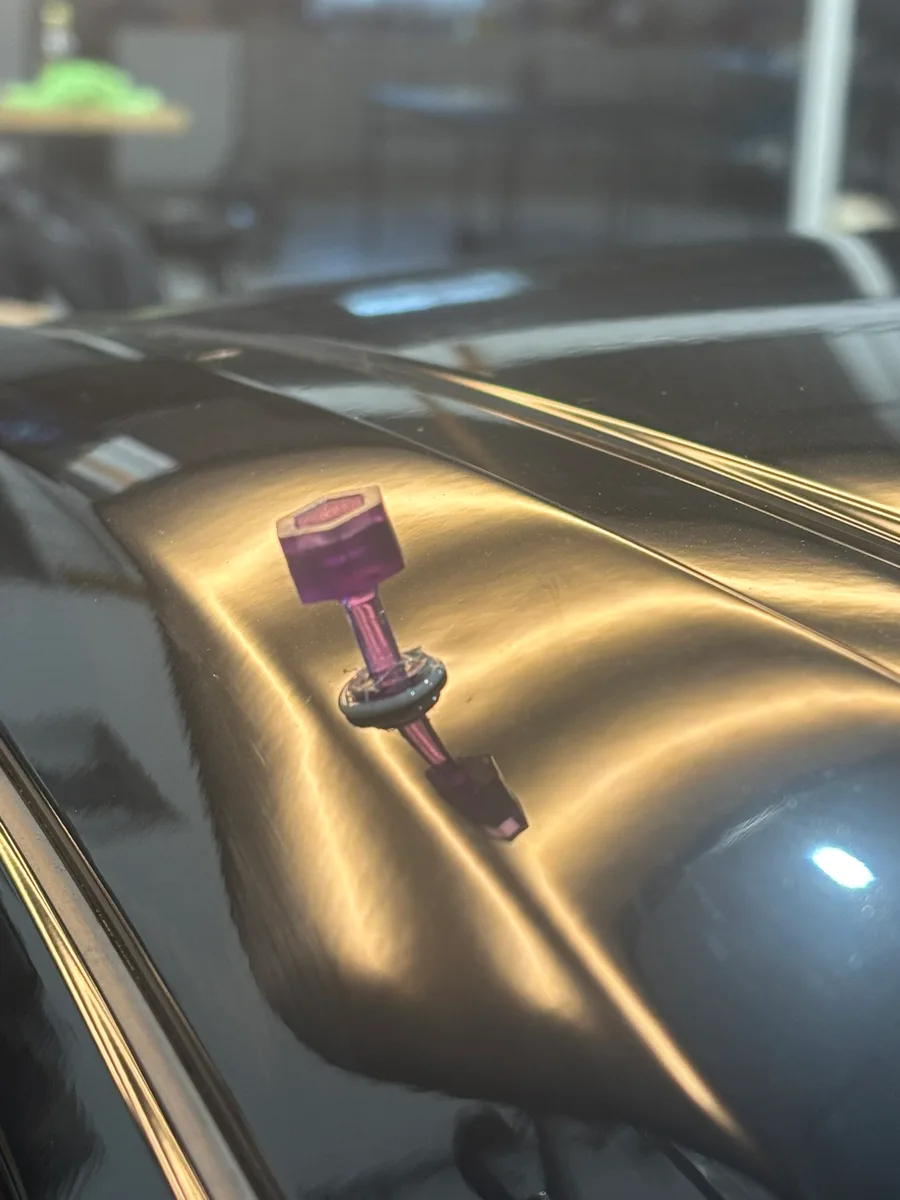
How does paintless dent repair cost compare to a body shop?
On hail specifically, a body shop runs 30 to 50 percent higher — because the process is fundamentally different.
A body shop has to sand, fill, prime, paint, and clearcoat every damaged panel. That sequence needs materials — filler, primer, paint, clearcoat, sandpaper, solvents — and far more labor hours than working each dent from behind the panel. On a moderately damaged sedan, paintless dent repair lands near $5,500 with about two days of shop time, factory paint preserved and no CARFAX record. The body-shop equivalent runs closer to $8,200 over two to three weeks, with a refinish that posts to the vehicle's history.
Carriers prefer paintless dent repair for hail because it costs less and finishes better. It is the industry standard for hail, which is why adjusters rarely push back on it as a method. A body shop becomes the right call only when the paint is already cracked or chipped from the impact — true on a small share of severely damaged vehicles. The full comparison.
What surprises customers most about the estimate?
After 5,000-plus vehicles, the same pricing patterns repeat. These are the line items people do not see coming.
The roof is almost always the biggest surprise. It is the largest single panel on most vehicles, and because hail falls from above, it catches the most damage. A roof with 80 to 120 dents can carry $1,500 to $2,500 of the estimate on its own — which is why someone who looked at their hood and guessed "maybe $1,000" is taken aback when the roof doubles it.
The A-pillar and cowl area is the second. Where the hood meets the windshield and transitions to the roof rail, dents collect that are nearly invisible without line-board inspection. The zone is also slow to work because access is tight, and it quietly adds $300 to $600 to many estimates.
The vehicle-type multiplier is the third. Full-size trucks and SUVs come in 40 to 60 percent higher than a neighbor's sedan after the same storm. The math is simple — more panel surface means more dents means more cost — but the sticker shock is real when a moderately damaged Suburban lands at $9,000 to $11,000.
The one fact worth carrying away: the first estimate is a starting point, not the final number. The supplement process exists to close the gap between what the adjuster saw and what is actually there under the line boards. Do not decide whether to repair based on that first figure alone — get a line-board inspection first.
Stop guessing what your hail damage costs.
A free thirty-minute inspection at our Olathe shop — or wherever your vehicle is — puts every panel under LED line boards and produces the CCC ONE estimate your insurer works from. No obligation, no pressure. You file your claim; once it's approved, we coordinate the repair.
Hail repair cost, answered
Can you give me a price over the phone?
A rough range, yes — an accurate number, no. Dent count and how the damage spreads across panels matter too much for a phone figure to hold up. We do free thirty-minute inspections at our Olathe shop that produce the actual CCC ONE estimate your insurer will work from.
Why does the insurance estimate come in lower than the real cost?
First estimates run roughly 20 to 40 percent low because of where they happen. Adjusters write them in driveways and parking lots without LED line boards, so most of the damage stays hidden. The shop estimate becomes the supplement that brings the total back to reality. How supplements work.
Will comprehensive coverage pay for paintless dent repair?
Yes — comprehensive covers hail damage minus your deductible. Once the supplement documents the full scope under our line boards, the carrier pays the documented repair on an approved comprehensive claim. You file your claim; once it is approved, we coordinate the repair. Deductible guide.
Why is my neighbor’s estimate different from mine after the same storm?
Because every vehicle catches hail differently. Parking angle, vehicle height, body style, panel material, and where the car sat relative to the wind all change the dent count and where the dents land. Two cars in the same driveway during the same storm routinely come back $2,000 to $4,000 apart.
Is it worth filing a claim for light hail damage?
In most cases, yes. Light hail repairs run $1,500 to $3,500, and comprehensive claims generally do not raise your rates. The point where filing stops making sense is when the repair lands at or below your deductible. Rate-impact guide.
Does aluminum really cost more to repair?
Yes — aluminum panels carry a 25 percent markup on the CCC ONE matrix. The figure covers the extra time and the heat-assisted technique aluminum requires, and it applies to vehicles like the Ford F-150 (2015 and newer), Tesla, and Rivian. Aluminum hail repair.