
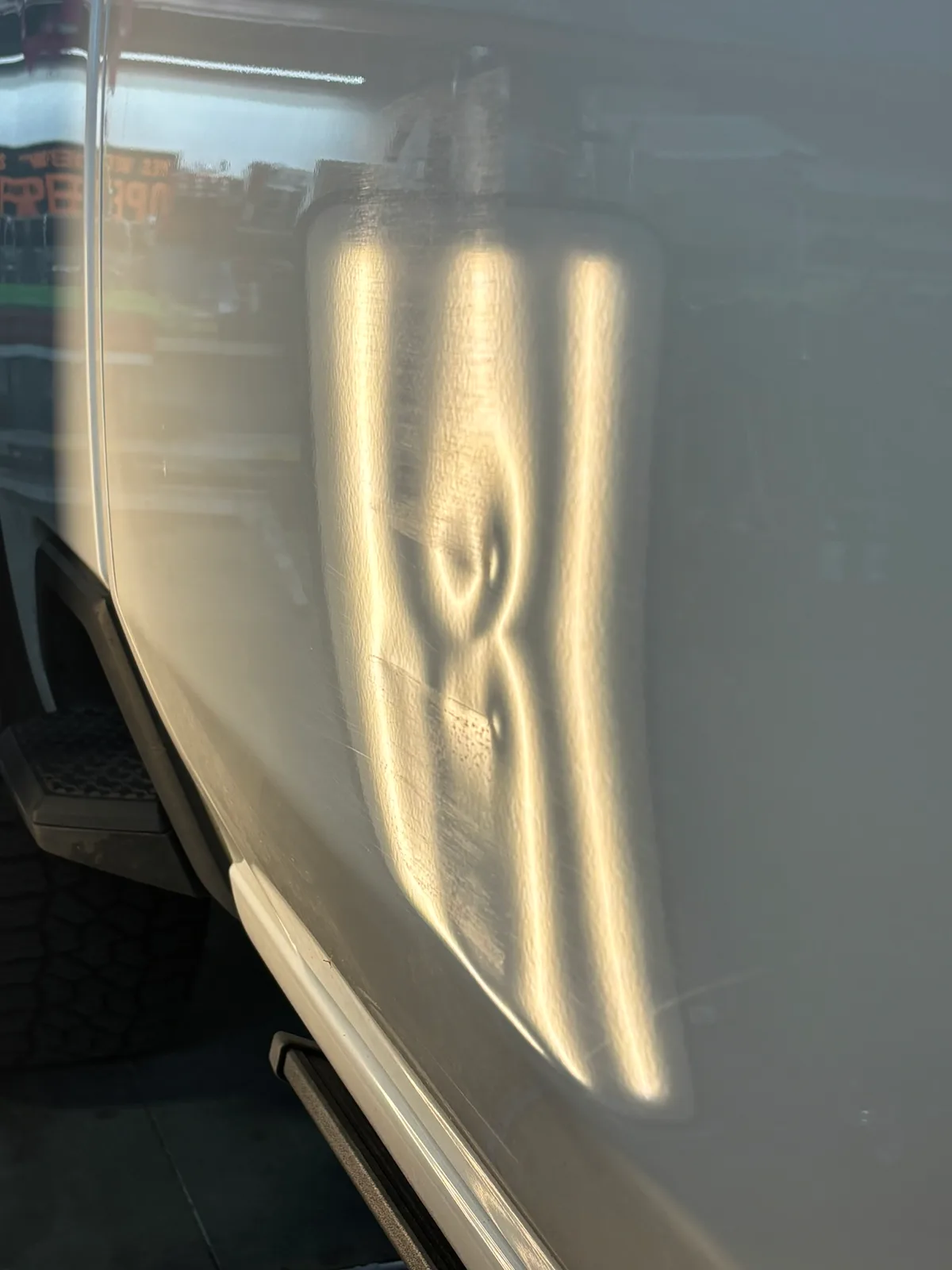
You walk out to your car, see the roof, and your stomach drops. If this is the first time you've had to deal with hail damage — and for most Kansas City drivers, it is — the next 48 hours matter more than you probably realize. Get them right and your claim goes smoothly, your car comes back looking factory, and you pay little or nothing out of pocket. Get them wrong and you're on the phone with insurance companies for months.
This is the exact sequence we give every first-time customer who walks into our Olathe shop. Nine steps. None of them complicated. All of them important.
1. Don't panic — and don't touch anything yet
Hail damage isn't going to get worse in the next 24 hours. Unless a window is broken or the interior is exposed to weather, there's no rush to move the car or assess it on your own. The biggest early mistake people make is running their hand over the dents looking for damage — skin oil from your hands can make some dents harder to document later under LED inspection.
Park in a garage if you have one. Otherwise just leave it where it is and move on to step 2.
2. Take photos in the right light
Phone photos in daylight will miss 60–70% of the actual damage. We know this because we re-inspect every vehicle that comes into our shop under professional LED line-board lighting, and we typically find 20–40% more dents than the insurance adjuster's initial photo-based estimate. Your phone in sunlight is even less sensitive than the adjuster's camera.
For the photos you need right now (for your initial claim submission), park the vehicle where the sun is at a low angle — early morning or late afternoon — or pull it into a garage and use a bright worklight. Take wide shots of each panel first, then zoom in on any visible dents. Don't stress about missing some; the shop will document everything later.
3. Check your insurance — specifically, your comprehensive coverage
Hail damage is a comprehensive claim, not collision. This is the single most important thing to understand before you pick up the phone. Comprehensive covers non-collision damage — hail, wind, theft, vandalism, fallen trees, deer strikes. It's classified as "act of God" and is generally no-fault, meaning rates typically don't go up when you file.
Log into your insurance app or look at your policy documents. Specifically check: do you carry comprehensive coverage, what's your comprehensive deductible, and is rental coverage included. You'll need this information for step 5.
4. Decide whether it's worth filing a claim
If the damage is truly cosmetic and your deductible is $1,000, sometimes it isn't worth it. Sometimes it is. The math depends on severity and deductible. Our rule of thumb: if the estimated repair exceeds your deductible by $2,000 or more, filing almost always makes sense. If it's closer than that, use our "Should I File?" tool or call us for a free honest opinion.
Here's what most first-timers don't know: you can call us before filing. We'll give you a straight recommendation with a repair estimate range — no obligation, no pressure.
5. Call your insurance company and file the FNOL
FNOL stands for First Notice of Loss. It's the first official call to your insurer reporting the damage. Have the following ready: the date of the storm, your vehicle information, your comprehensive deductible amount, and photos if they ask for them. Your insurer will assign a claim number — write it down immediately. That number is the reference for everything that follows.
Most carriers will try to route you to their preferred shop network (DRP, or Direct Repair Program). You are not required to use it. Missouri and Kansas both have anti-steering laws protecting your right to choose any repair shop you want.
6. Choose your shop — and make it a hail specialist
General body shops will repair hail damage, but they'll do it using conventional methods: pulling dents, applying body filler, sanding, priming, and repainting. This generates a CarFax body repair record and reduces your vehicle's resale value, sometimes by thousands of dollars. It also takes 2–4 weeks.
A paintless dent repair specialist does the same job in 1–3 days, preserves your factory paint entirely, and leaves no CarFax flag. For hail specifically, PDR is the right tool. More on the PDR vs body shop decision.
7. Get a professional inspection (not the insurance one)
The insurance company's initial inspection — whether it's an adjuster visit, a CAT site, or a photo-based estimate — is almost always too low. This isn't conspiracy theory; it's how the process works. Adjusters are generalists working quickly under imperfect lighting, and hail damage is inherently hard to see without the right setup.
A professional PDR shop re-inspects the vehicle under LED line-board lighting, maps every dent panel-by-panel, and writes an estimate in CCC ONE format — the same software the adjuster is already using. We typically find 20–40% more damage than the initial estimate. This is normal. It's also what supplements are for.
8. Let the shop handle the insurance negotiation
Supplement writing and approval is the most annoying part of any hail claim. Most repair shops will handle this on your behalf — we certainly do. The shop submits the expanded estimate to your insurer, negotiates approval (usually back in 1–2 business days), and coordinates any required re-inspections.
You don't need to be on these calls. You don't need to learn insurance terminology. Your job is to authorize the shop to talk to your insurer (one signature) and then let it happen.
9. Sit back and let the process run
From FNOL to keys back in your hand, the typical timeline is 2–4 weeks. About half of that is waiting for insurance approval and supplements. The actual repair takes 1–3 shop days for moderate damage, up to 7 days for severe cases.
During that window, a good shop will text you at each milestone: supplement approved, pickup scheduled, repair started, repair complete, vehicle ready. You shouldn't have to call anyone. If you're wondering what's going on, the shop should have already told you.
The one thing we wish everyone knew going in
You don't have to do this alone. The entire process is designed — intentionally or not — to feel overwhelming for first-timers. That's why we built our claim intake process to handle every step after you finish the FNOL call. Phone number, vehicle info, a few photos, and we take it from there.
If you just got hit and you're reading this at 9 AM the next morning with a cup of coffee and a damaged car in the driveway — start your claim online and we'll text or call you within the hour during business hours. If you want to talk it through with someone before filing, the shop line is on every page. Either way: take a breath. This is going to be okay.
Need the full-depth guide? The long-form version lives at our What To Do After Hail guide, with a downloadable PDF checklist. For carrier-specific filing cheat sheets, see our insurance claims guide.